





Adieu Paris
This is the original performance by Ann Southern in Lady Be Good (1941),
for which it got the Academy Award for Best Original Song.
It’s the only recording that includes the second verse.
June 2016 Going through my Paris bistro reviews, it appears that we went to the right places in the right years. Almost all of them appear to have prospered; but according to Paris By Mouth, one of the most reliable English language sites, the prices have typically doubled, the demand for tables increased in geometric progression, and the front-of-house staff now behave like guardians of the Eleusinian Mysteries. In other words, eating really well in Paris, and at a reasonable price, requires the advice of a knowledgeable native.
September 2013: Alas, the days of pigging out in Pa ris on the cheap are over. I used to boast that I could eat better in Paris than in London for the same price, including the cost of getting there, but that was before the pound collapsed against the euro, the cheapest Eurobus fare tripled, and inflation hit Paris as hard as any other major city. Nevertheless,when Frank offered us his pied à terre, we decided to treat ourselves with a revisit. (This is his living room's glorious ceiling.)
In the course of ten bistro dinners we discovered that, if you're a foreigner who wants to eat really well in Paris these days, it helps to be rich. Even the modest bistros have shot up in cost, particularly with wine. At those where I got a glimpse of the next couple's bill, it was more than double our own and it wasn’t because they had eaten more expensively. And no wonder—the wine lists were in the rapidly ascending double figures. The one glass I allowed myself with a meal cost 4.50€ for 10cl of a weak pale red that wasn’t as good as the Montepulciano d’Abruzzo I buy at home for less than three quid a bottle, even with Britain's ferocious alcohol tax. And so I got in the mood for a meal with a couple of glasses before we left the flat and then a couple more when we got back. If I had drunk that quantity at any of our bistros, it would have cost as much as two 3 litre boxes of decent plonk at the local Monoprix.
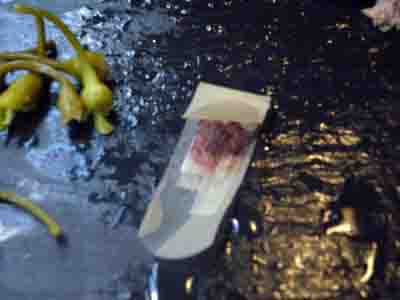 As you will see from the new entries, our dining experience in Paris this time was mixed. Two meals were glorious, two were a revelation of what young hip diners are eating and drinking, two were satisfying in an old-fashioned way, two with big reputations were disappointing, and one was . . . well, an experience (see left). You'll find the rest in the index marked NEW.
-0-
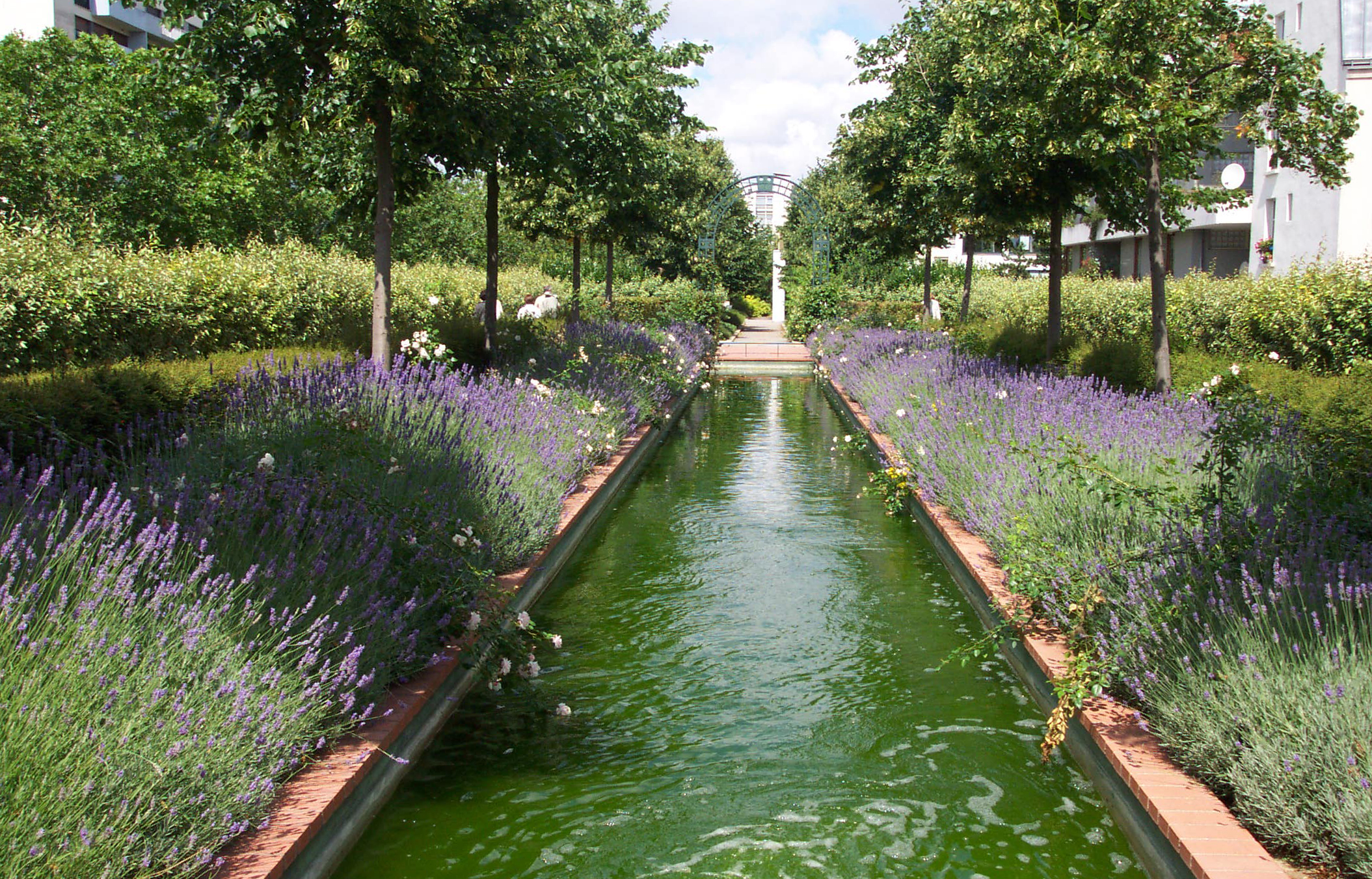 As for Paris itself, it was disturbing to find it going the way of all big cities. The masses on the metro are as fat as anywhere and even more badly dressed than in London. And there are disheartening evidences of municipal shabbiness. One of our favorite walks was the Promenade plantée, which follows the old Vincennes railway line. This is as I photographed it half a dozen years ago; now most of it is overgrown with weeds, looking as if it had been neglected all summer, its canal long empty.
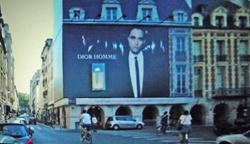
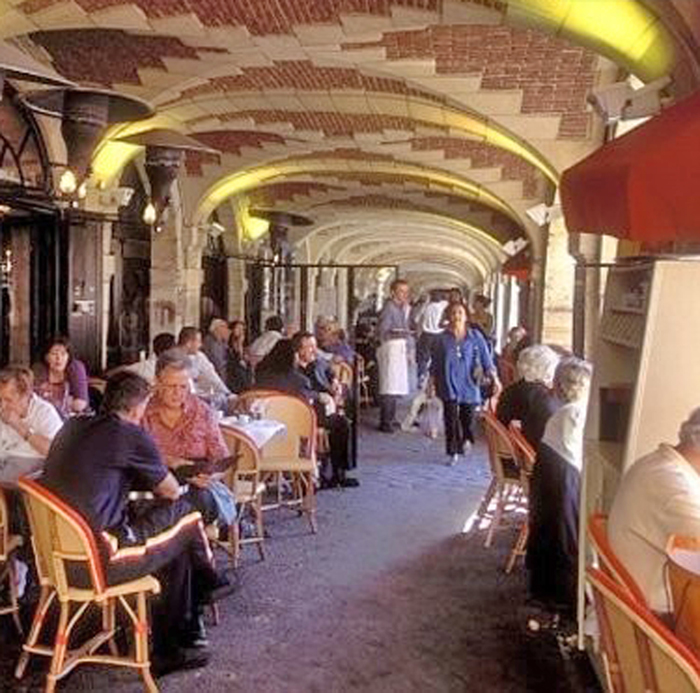 George Simenon's (and Maigret's) favorite brasserie, Ma Bourgogne (left), still sits unchanged on the northwest corner of the glorious Place des Vosges, but the square's entire south edge is disfigured by shabby vaulting and boarded-up shop fronts covered in graffiti (right). Even more oppressively obtrusive is an enormous Dior Homme ad covering construction work on the east si
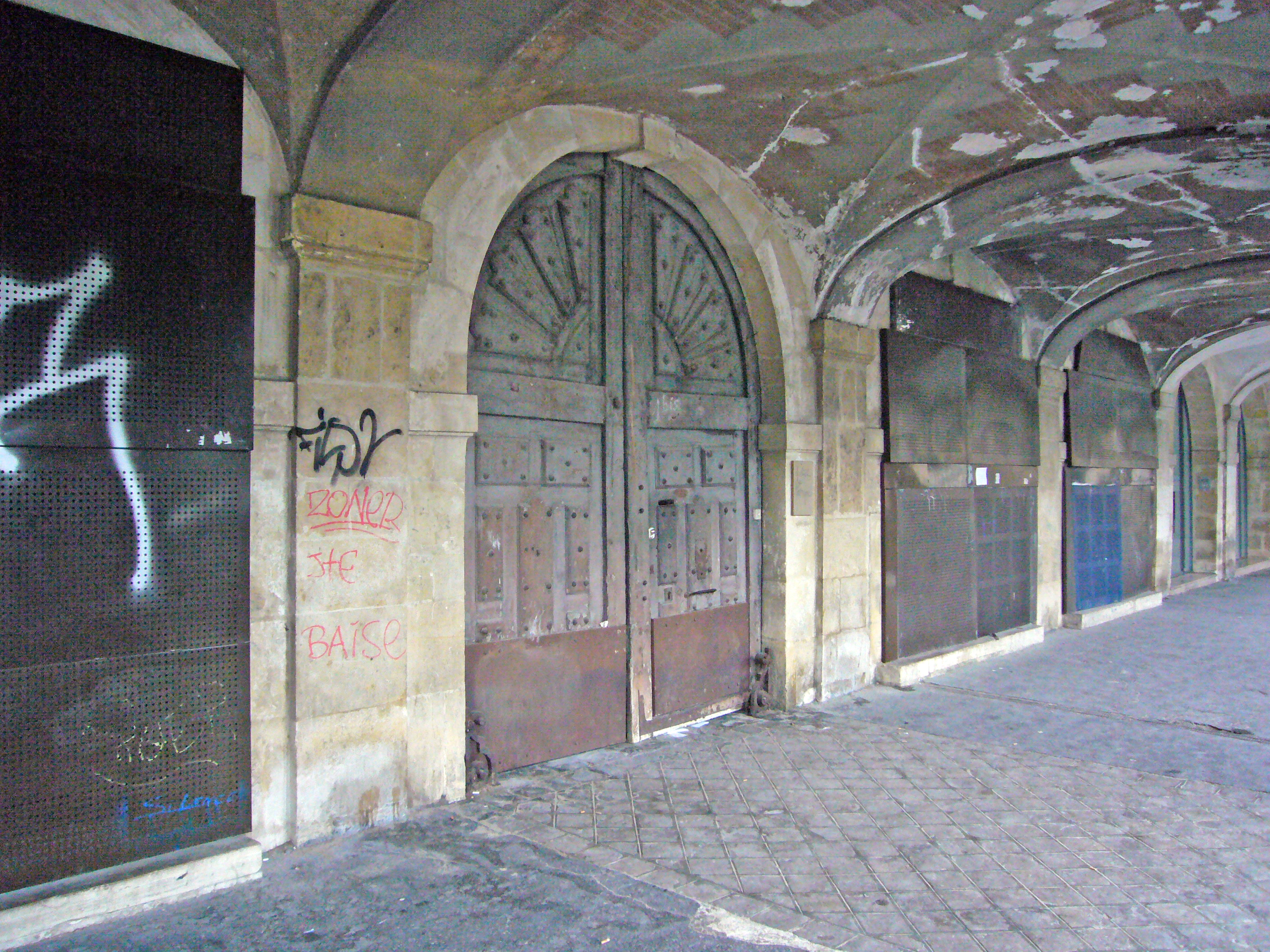 de. When they did this to the Piazza San Marco in Venice, the excuse was dire civic poverty.
Fortunately,the old hotels (mansions) in the Marais that Andre Malraux saved from demolition and established as free civic museums are still gloriously there, but the fascinating Musée de la Serrure (Museum of Locks and Keys) no longer exists. Its former home, the magnificent Hôtel Libéral Bruand built in 1685 by the architect of the Invalides, is now signposted propriete privée.
POSTSCRIPT: In this recorded conversation with John Talbott four years ago, we both expressed a guarded optimism about the future of the Paris restaurant scene:
Good bistros are still there, but you have to look harder and you're unlikely to find them by accident. Alexander Lobrano in Paris by Mouth has put his finger squarely on it:
Paris is in the midst of an accelerating process of culinary displacement that’s sidelining traditional French food. These days, in fact, it’s a lot easier to find an Italian or a Japanese meal in a popular Paris neighborhood like Saint-Germain than it is a traditional French one.
Alas, in the long run inventiveness alone may fail to save many of the quality eating places, whose prosperity depends on that of the economy as a whole, still in the descendency. As for the critics, their employment hangs not only on a steady stream of new venues to write about, but on the fortunes of the media bosses who sign their cheques. Meanwhile the foodie websites go on arguing to the decimal point the relative merits of Michelin-starred restaurants as if the champagne were still flowing like tap water.
TOP PARIS BISTRO INDEX BY ARRONDISSEMENT HOME
